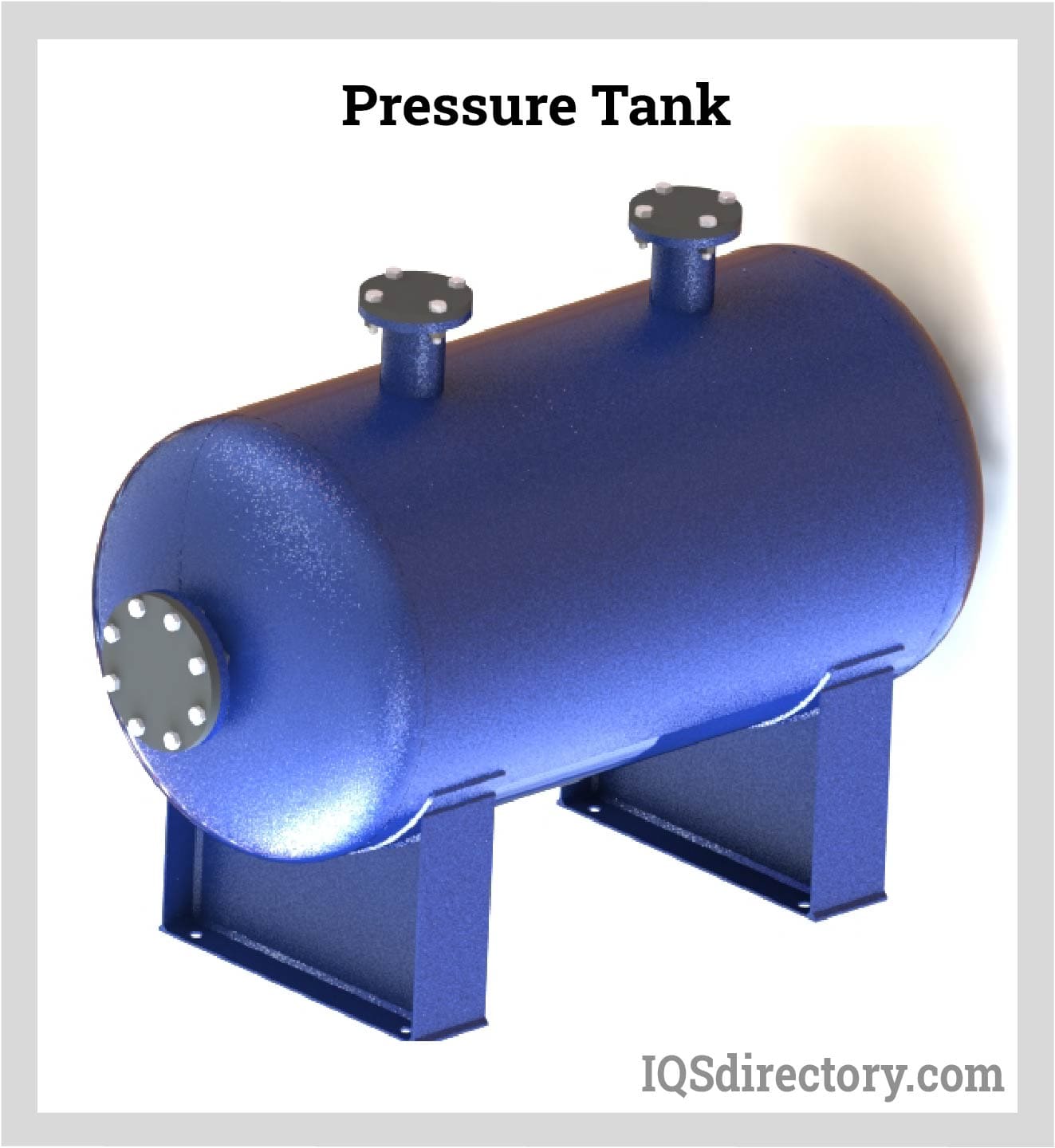
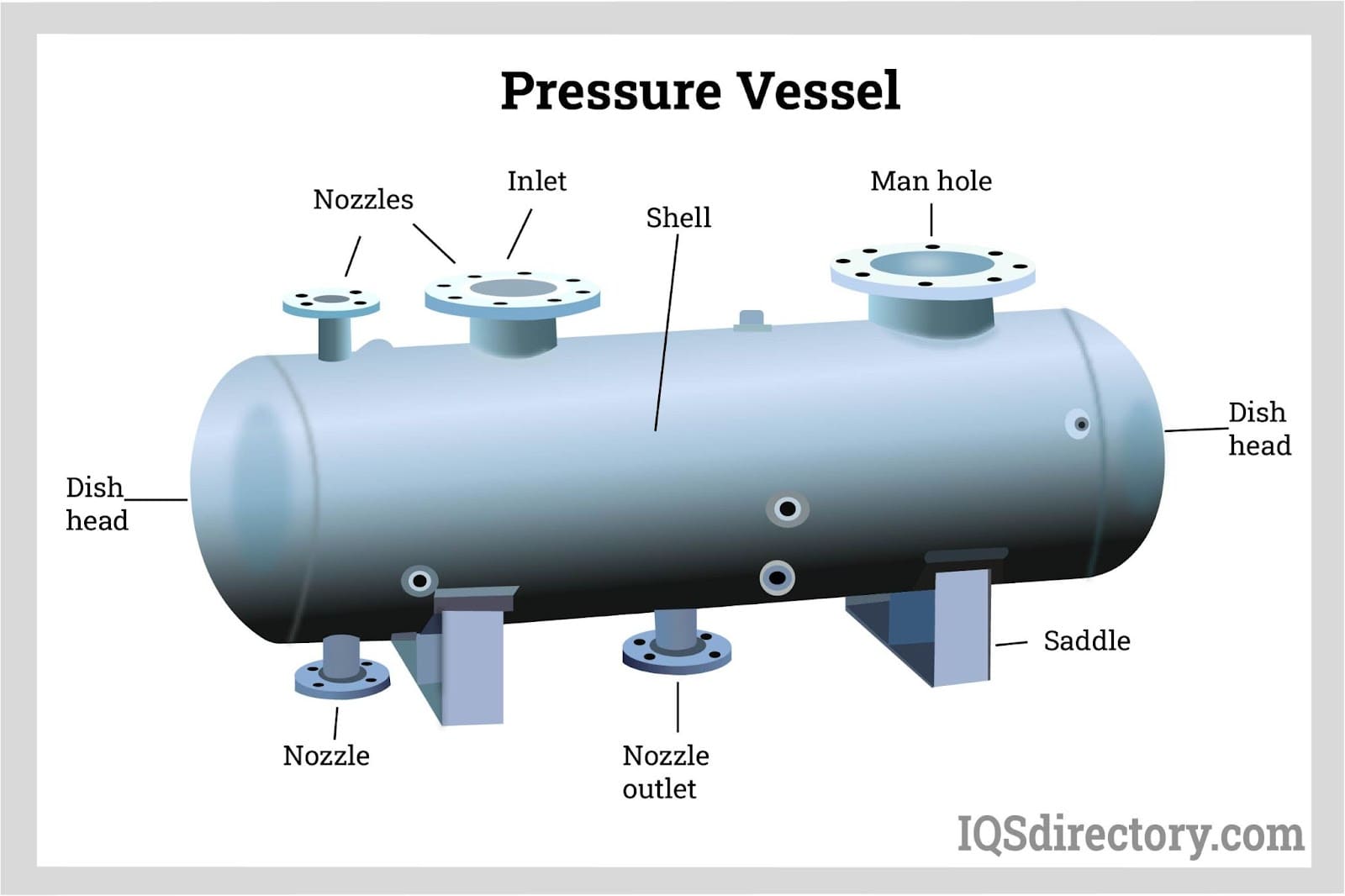
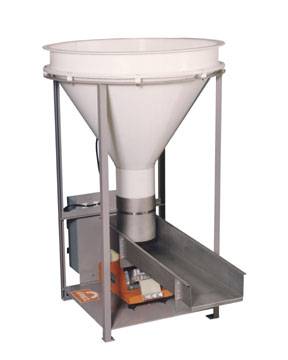
Water pressure tanks (also known as water pressure vessels) are used to store water or other liquids at pressures higher than atmospheric pressure. Pressure tanks are commonly used in household water supply systems and with wells to help maintain a regular flow of water and to avoid vapor loss to the atmosphere by maintaining proper system pressure. Read More…
If you are looking for innovative pressure vessels, you’ve come to the right place! We actively manage your project every step of the way. We keep you informed of what we are doing to ensure we keep up to your standards and delivery times.
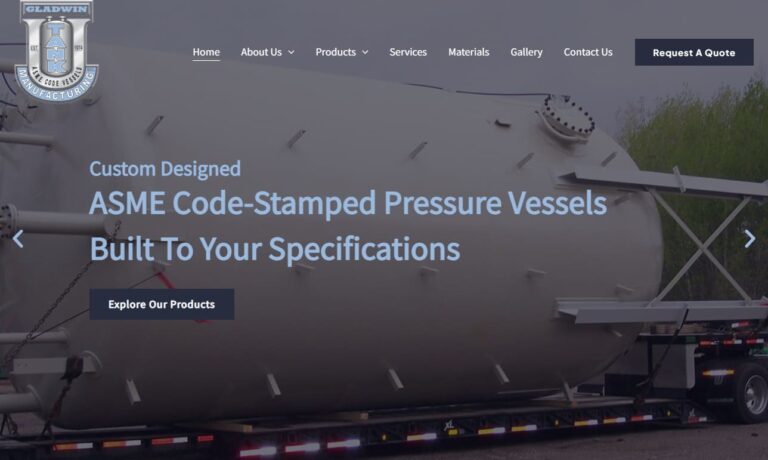
Gladwin Tank Manufacturing builds custom ASME pressure vessels. We work with stainless, carbon, duplex and the nickel alloys and offer custom rolling, plasma, and water jet cutting. Paired with our expertise in multiple welding procedures, we’re capable of handling every project, large and small. Contact us for your custom build requirements. We are more than just pressure vessels, we...
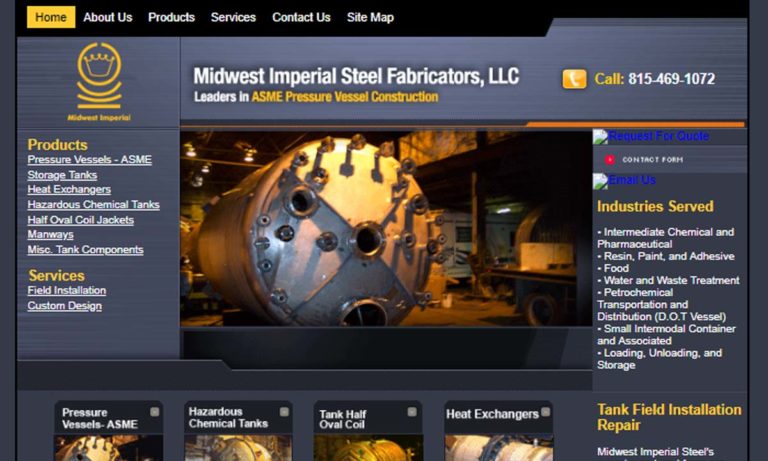
Rexarc’s focus is on the fabrication of custom stainless and carbon steel pressure vessels. We welcome applications with pressures between 500 and 5,000 psi. After nearly 100-years of being in business, Rexarc has the knowledge, attitude, equipment, and processes to support your needs in vessel production and value add services of piping, instrumentation, paint, and other controls...
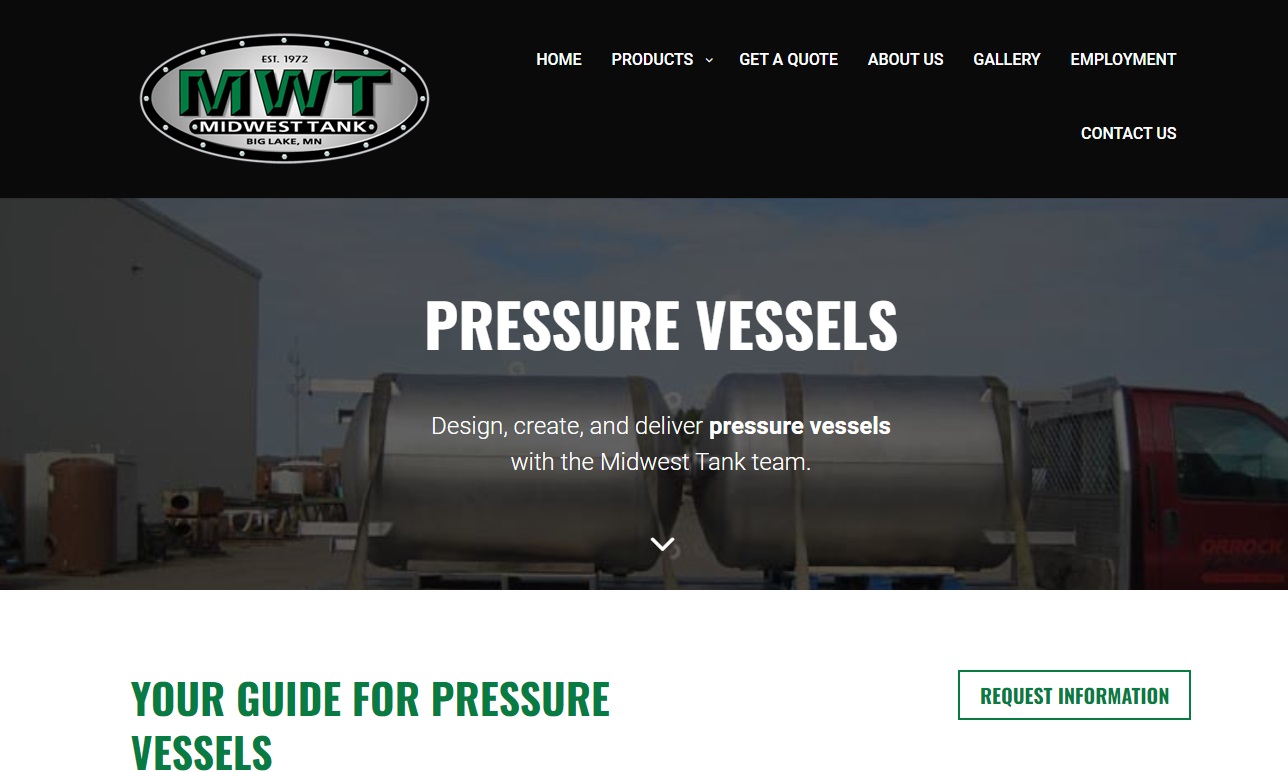
Midwest Tank Company has provided quality tanks to small and large corporations and contractors since 1972. Our reputation is built on exceptional services and customer satisfaction! Our fabrication techniques have been developed through years of tank specialization, combined with personnel who are experienced in all phases of our operation.
Vector Systems, Inc. is a leading provider of Process Control Equipment, specializing in comprehensive solutions for the Chemical, Power Generation, and other Industrial sectors. With a strategic focus on innovation and reliability, Vector Systems has become a trusted partner, offering a wide range of products and services tailored to the unique needs of demanding industries.


More Water Pressure Tank Manufacturers
What are Water Pressure Tanks?
Water pressure tanks, also known as pressure vessels or hydropneumatic tanks, are essential components in water supply systems. These tanks are engineered to safely store and regulate the pressure of liquids and gasses—most frequently water—in residential, commercial, industrial, and agricultural applications. High-pressure tanks are also utilized across industries for safely storing and transporting a range of substances, including compressed gases, liquefied gases, chemicals, and even bulk solids. The particular use case, whether for potable water systems, fire protection, irrigation, or process manufacturing, dictates the tank’s design, construction material, and operating specifications.
Pressure tanks play a crucial role in maintaining consistent water pressure, protecting pumps from rapid cycling, and ensuring reliable water delivery, especially in well water systems and booster pump applications. They are also vital in municipal water supply, HVAC systems, and specialized applications such as high-pressure cleaning, chemical dosing, and industrial process control.

Key Functions of Water Pressure Tanks
- Maintaining Water Pressure: Ensures steady water pressure to fixtures and equipment, preventing surges and drops.
- Reducing Pump Cycling: Minimizes the frequency of pump starts and stops, extending pump lifespan and reducing energy consumption.
- Storing Reserve Water: Provides a buffer of pressurized water for peak demand, power outages, or pump maintenance.
- Protecting Plumbing Systems: Absorbs shocks and fluctuations, safeguarding pipes and appliances from damage.
Common Applications
- Residential well water systems
- Booster pump systems for municipal water
- Fire protection and sprinkler systems
- Irrigation and agricultural water delivery
- Industrial process water supply
- Commercial buildings and high-rise plumbing
- HVAC and hydronic heating systems
How Pressure Tanks are Made
The construction of a water pressure tank is a highly engineered process, with design parameters determined by the intended location, holding capacity, maximum and minimum pressure requirements, and workload. Design engineers must consider factors such as corrosion resistance, longevity, operating temperature, pressure ratings (measured in PSI or bar), and code compliance (such as ASME, API, or NSF certifications) to ensure optimal performance and safety.
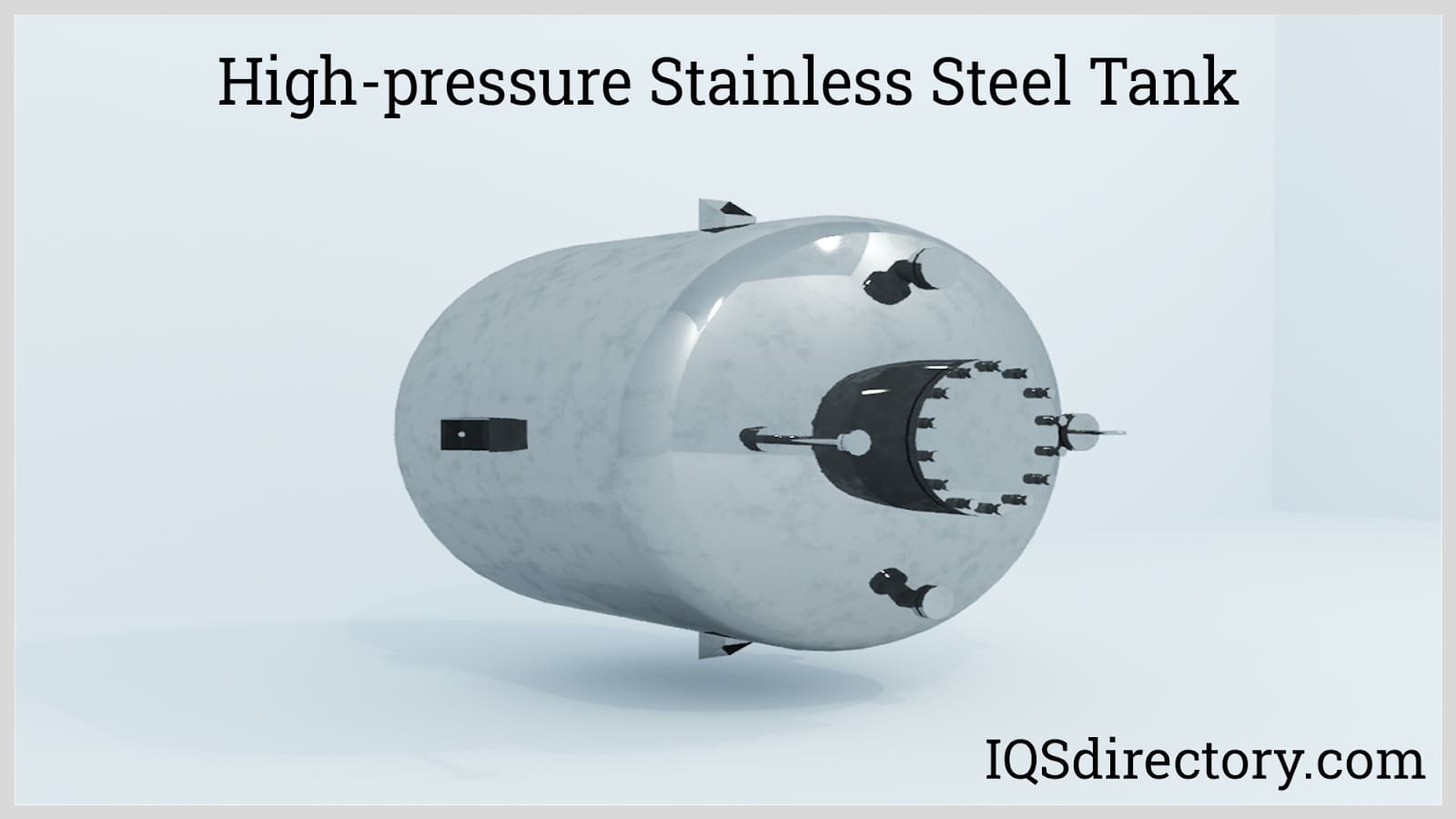
The body or cylinder of a pressure vessel is fabricated from robust materials such as carbon alloy steel, stainless steel pressure vessels, titanium, zirconium, aluminum, nickel alloys, niobium, or advanced high-strength polymers and composites. Among these, steel—especially stainless and carbon steel—remains the most widely used due to its superior strength, durability, and ability to withstand high internal pressures and temperatures without deformation or failure.
To enhance mechanical properties, the metals are typically cold-rolled, which increases their tensile strength and surface finish compared to hot-rolled alternatives. Additional treatment processes such as tempering, quenching, or galvanizing can further improve metal resilience against corrosion, fatigue, and temperature extremes, making the tanks suitable for demanding industrial and commercial uses.

Manufacturing Processes
Pressure vessels and water pressure tanks are typically manufactured using one or more of the following methods:
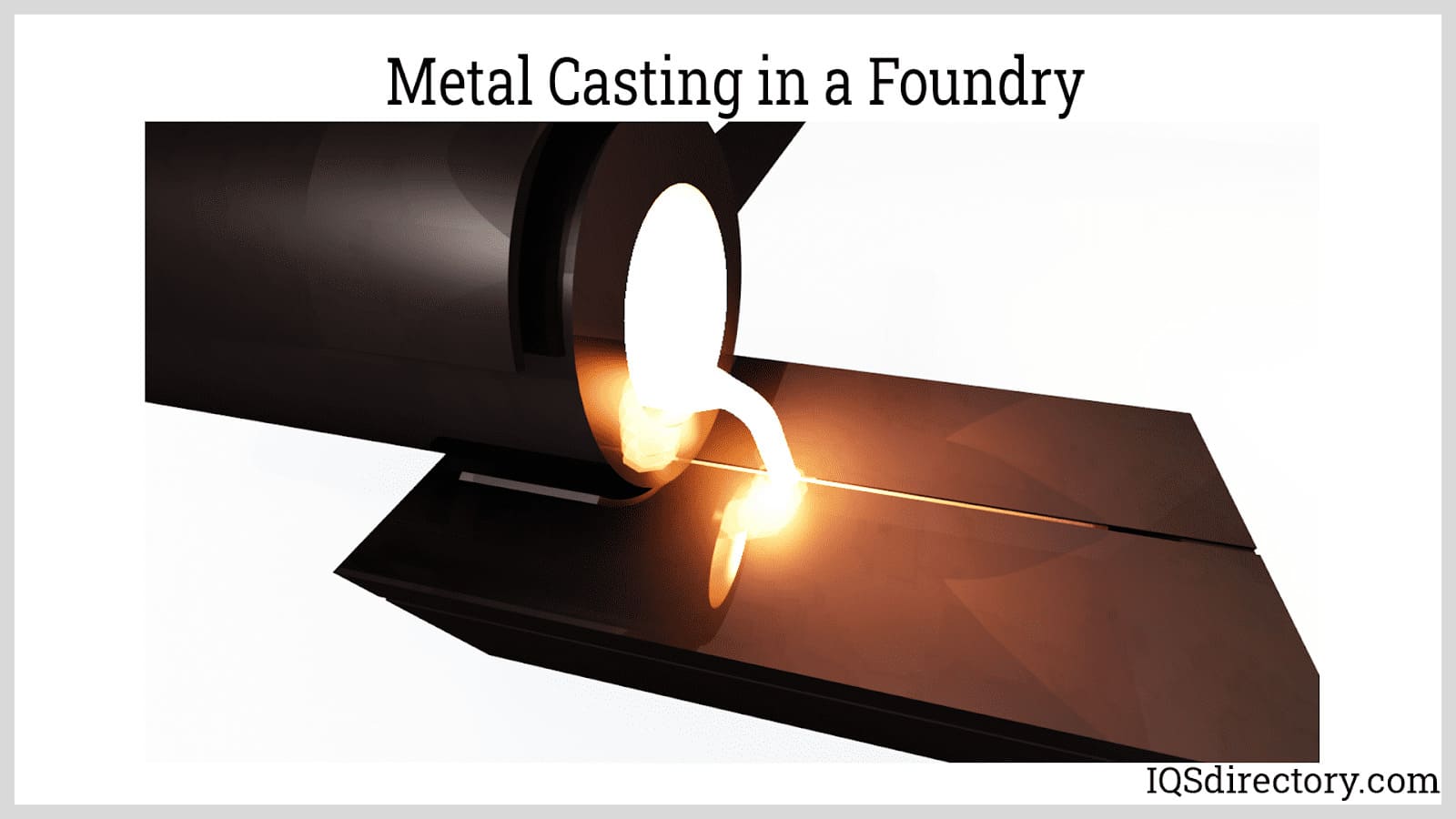
- Forging: Involves shaping metal components under intense heat and pressure, yielding high-strength, seamless tank bodies suitable for extreme pressure applications.
- Brazing: Joins metal parts by melting a non-ferrous filler metal into the joint, creating leak-proof seals commonly used in heat exchangers and specialty tanks.
- Welding: The most common technique, welding fuses similar metals at their edges to form a unified, structurally sound vessel. Advanced welding methods such as TIG, MIG, and submerged arc are often employed for superior quality and reliability.
Modern tanks may also utilize high-strength polymers or fiberglass for lightweight, corrosion-resistant applications, especially in potable water systems or chemical processing where metal tanks could be susceptible to contamination or chemical attack.
Quality Standards and Certifications
Leading water pressure tank manufacturers adhere to rigorous quality standards, following codes such as ASME Section VIII, API 650, or NSF 61 for drinking water safety. Each completed vessel undergoes thorough testing including hydrostatic pressure tests, X-ray weld inspection, and leak detection to guarantee structural integrity and compliance with regulatory requirements.
Types of Pressure Tanks
The market offers a diverse array of pressure tanks tailored to specific uses, operating conditions, and industry requirements. The selection of the right tank type depends on factors such as intended application, capacity, material compatibility, installation site, and budget. Below are the most common types of water pressure tanks and their unique features:
1. Storage Vessels
Storage vessels are the most prevalent type of pressure tank, widely used across industries for holding liquids, including potable water, chemicals, and industrial fluids. These tanks come in various sizes (from small residential units to massive industrial reservoirs), shapes (horizontal, vertical), and construction materials (carbon steel, stainless steel, fiberglass, or lined steel).
Typically, the internal and external components may be fabricated from different materials to optimize corrosion resistance and structural performance. For example, carbon steel tanks may be lined with epoxy or glass to safely store aggressive chemicals or meet drinking water standards.
2. Heat Exchangers
Heat exchangers are specialized pressure vessels designed for efficient thermal transfer between fluids, critical for applications such as water heating, industrial process control, and HVAC systems. These tanks are built with high-quality, thermally conductive materials to withstand temperature fluctuations, pressure cycles, and potential corrosion.

Water pressure tanks used in heat exchanger applications are often manufactured from reinforced or alloyed metals (such as stainless steel with high chromium or molybdenum content) to ensure long-term durability and reliable performance under high pressure and temperature conditions. These features make them ideal for industrial steam systems, hydronic heating, and large-scale water heating solutions.
3. Technological Vessels
Technological vessels encompass a broad category of pressure tanks designed for specialized processes, such as mixing, reaction, or separation. For example, an air pressure tank combined with a pump is often used in pneumatic conveying, chemical dosing, or fermentation. These tanks are engineered with specific materials, coatings, or internal components tailored to the unique demands of each process.
Do you need a pressure tank for a specific industrial or manufacturing process? Explore our pressure tank solutions to find the right fit for your technological application.
4. Thin-Walled Pressure Vessels
Thin-walled pressure vessels, defined by a shell thickness less than 10% of their diameter, are engineered for applications where weight savings, rapid heat dissipation, or compact design are priorities. These tanks are commonly found in aerospace, research, and specialty industrial uses.
There are two main forms: spherical pressure vessels (offering uniform stress distribution and high strength-to-weight ratio) and cylindrical pressure vessels (offering ease of manufacture and installation). Thin-walled tanks are ideal for storing or transporting liquids and gases at moderate pressures, and are also used as structural skins in rockets, satellites, and high-altitude scientific balloons.
5. Diaphragm and Bladder Tanks
Diaphragm and bladder tanks are advanced types of hydropneumatic vessels used primarily in water well systems, booster pump stations, and water hammer arresting. These tanks feature an internal flexible membrane (diaphragm or bladder) that separates the air and water, preventing air absorption and maintaining consistent pressure.
- Diaphragm Tanks: Use a rubber diaphragm sealed to the tank wall, ideal for residential and light commercial water systems.
- Bladder Tanks: Feature a replaceable bladder, suitable for high-cycle or heavy-duty applications, and offer easy maintenance.
Looking for the right diaphragm or bladder tank for your water system? Browse our selection of pressure tanks for well water and booster systems.
How to Choose the Right Water Pressure Tank
Selecting the best water pressure tank for your needs involves careful consideration of several key factors. Making an informed decision ensures system reliability, longevity, and cost-effectiveness. Here’s a step-by-step guide to help you evaluate your options:
- Determine Your Application: Is the tank for residential well water, irrigation, fire suppression, industrial process, or commercial plumbing?
- Calculate Required Capacity: Consider peak water demand, pump flow rates, and desired reserve volume. Use online tank sizing calculators or consult with an expert.
- Assess Pressure Requirements: Match the tank’s pressure rating (PSI/bar) to your pump and system needs. Higher-pressure tanks are necessary for tall buildings or specialized industrial applications.
- Choose the Right Material: Select corrosion-resistant materials such as stainless steel, epoxy-lined carbon steel, or composite/fiberglass for aggressive water or chemical environments.
- Evaluate Maintenance Needs: Bladder and diaphragm tanks are low-maintenance, while plain steel tanks may require periodic air recharging or inspection for corrosion.
- Check Certification and Compliance: Ensure the tank meets relevant standards like ASME, NSF, or local building codes.
- Consider Installation Constraints: Take into account available space, tank orientation (vertical/horizontal), and access for service or replacement.
Still unsure which pressure tank suits your requirements? Ask an expert: Contact our team for personalized advice or a custom quote.
Benefits of Quality Water Pressure Tanks
Investing in a high-quality water pressure tank delivers numerous advantages for both residential and commercial users:
- Consistent Water Pressure: Enjoy steady water flow at all fixtures, even during peak demand periods.
- Reduced Pump Wear: Minimize pump starts and stops, lowering energy consumption and extending pump life.
- Protection Against Water Hammer: Cushion pressure surges to prevent pipe damage and leaks.
- Emergency Water Storage: Maintain an accessible reserve during power outages or pump failure.
- Corrosion and Contamination Resistance: Choose tanks with advanced linings or made from stainless steel for safe, clean water storage.
- Longer System Lifespan: High-quality tanks reduce maintenance costs and system downtime.
Industry Use Cases and Applications
Water pressure tanks serve an integral role across a wide spectrum of industries and infrastructure. Common use cases include:
- Residential Homes: Well water pressure tanks ensure reliable water delivery for showers, appliances, and outdoor use.
- Commercial Buildings: Booster systems maintain pressure across multiple floors and extensive plumbing networks.
- Industrial Facilities: Process water tanks regulate flow for manufacturing, cleaning, and cooling operations.
- Agricultural Operations: Tanks provide pressurized water for irrigation, livestock, and crop spraying.
- Municipal Water Systems: Hydropneumatic tanks stabilize pressure, prevent main breaks, and manage peak demand.
- Fire Protection: Dedicated pressure vessels ensure immediate water availability for sprinklers and hydrants.
- HVAC and Hydronic Systems: Expansion tanks absorb pressure changes in heating and cooling loops.
Looking to optimize your water system’s performance? Discover our full range of pressure tank solutions tailored to every industry and application.
Frequently Asked Questions about Water Pressure Tanks
How do I know if my pressure tank is failing?
Common signs include frequent pump cycling, erratic water pressure, visible tank leaks, or waterlogged tanks (no air cushion). If you experience these symptoms, consider tank inspection or replacement.
What size pressure tank do I need for my well?
The optimal size depends on well pump flow rate, household water usage, and desired pump run time. A larger tank reduces pump cycling and increases reserve capacity. Use an online calculator or consult with a water systems professional for accurate sizing.
Can I use a pressure tank in a city water system?
Yes, pressure tanks can be integrated with municipal water and booster pumps to maintain pressure in large or multistory buildings, especially where supply pressure is inconsistent.
What’s the difference between bladder, diaphragm, and plain steel tanks?
- Bladder Tanks: Use a replaceable air/water bladder to maintain separation and pressure.
- Diaphragm Tanks: Use a rubber diaphragm; typically not replaceable but reliable for most residential and light commercial uses.
- Plain Steel Tanks: No internal separation, may require regular air charging and are more prone to waterlogging.
How do I maintain my water pressure tank?
Periodic inspection for leaks, checking air charge (for non-bladder tanks), and ensuring proper pressure settings are recommended. Bladder and diaphragm tanks are generally maintenance-free until the internal membrane fails.
Choosing the Proper Water Pressure Tank Company
To ensure the best outcome when purchasing water pressure tanks, selecting a reputable and experienced water pressure tank company is crucial. Compare at least five vendors using our comprehensive water pressure tank directory. Each company profile highlights areas of expertise, manufacturing capabilities, certifications, and customer reviews. Use the contact forms to request detailed information, specifications, or a personalized quote.
When evaluating suppliers, consider these decision factors:
- Quality of materials and manufacturing processes
- Range of pressure tank types and customization options
- Compliance with industry standards (ASME, NSF, API, ISO)
- Proven experience in your application area (residential, commercial, industrial, municipal, agricultural)
- Warranty, after-sales support, and service agreements
- Delivery timelines and installation services
- Competitive pricing and financing options
Ready to get started? Review our water pressure tank company directory, preview top websites, and use our easy RFQ form to contact multiple suppliers with a single message. Get quotes, compare offerings, and find the best pressure tank solution for your project.
Further Resources and Next Steps
- Have a unique application? Request custom engineering support.
- Want to compare top-rated pressure tank models? Browse our product catalog.
- Curious about pricing or bulk discounts? Request a pressure tank quote now.
Whether you’re upgrading a residential well system, installing a commercial booster, or designing a custom industrial process, choosing the right water pressure tank is essential for efficiency, safety, and long-term reliability. Leverage our expertise and extensive selection to find the perfect pressure tank for your needs.